

The 180-degree rule is one of the key principles of filmmaking. It exists for the audience’s benefit. When a director follows the 180-degree rule, they are making the audience do less work. The 180-degree rule creates an axis between characters in the space of the scene. That axis splits a 360-degree space in half. By keeping the camera on one side of that axis as you cut between different shots, the spatial relationship of the characters will remain consistent and easy to follow. Below is a picture explaining the rule.
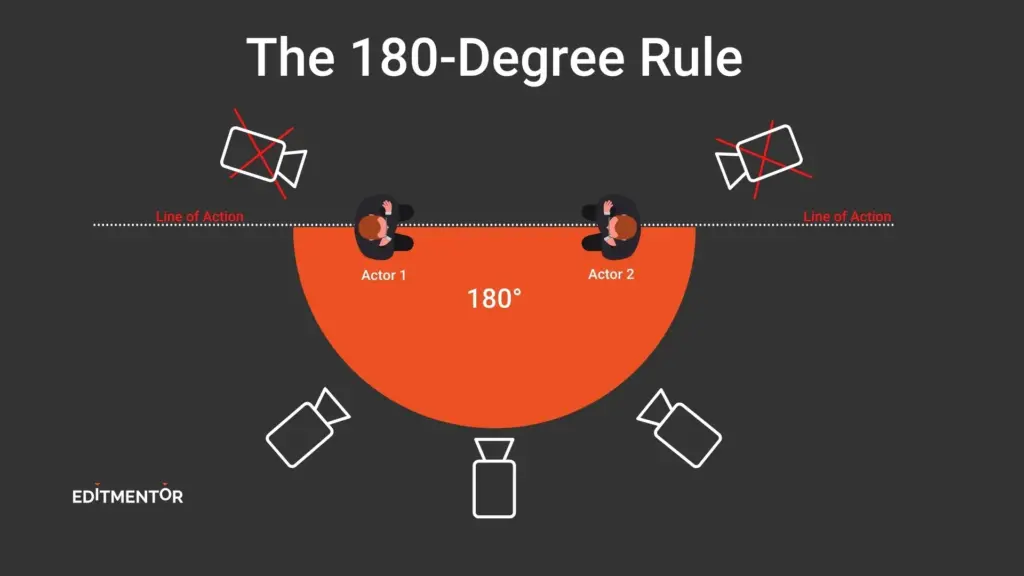
There was recently an online discussion about a blockbuster film that broke the 180-degree rule for seemingly no reason. Rather than dunk on that movie, I wanted to talk about an example of a film that breaks the rule with purpose and to great effect.
It is a scene from Light Sleeper (1992), directed by Paul Schrader and shot by Ed Lachman. The scene follows John (Willem Dafoe) and Marianne (Dana Delaney) at a hospital cafeteria. The pair are former lovers and recovering drug addicts. John was at the hospital to deliver drugs and happened to run into Marianne, who was there watching her sick mother. Marianne was hesitant to talk to John but relented with her sister’s encouragement.
Below is the YouTube video of the scene if you want to see it for yourself. I’m going to include screenshots as I describe what is going on, though so it isn’t necessary to watch before continuing.
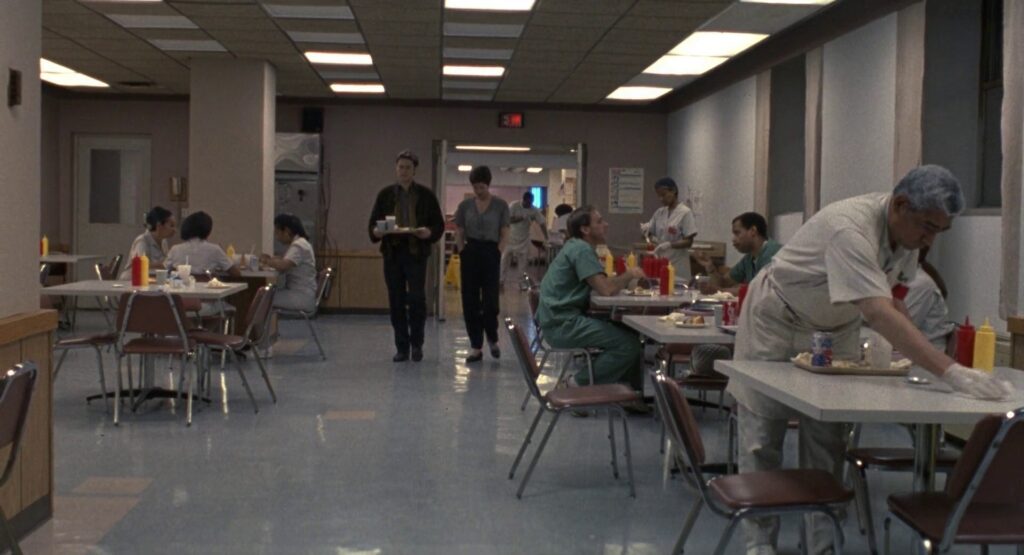
It opens with this tracking shot we follow the pair as they walk into the cafeteria.
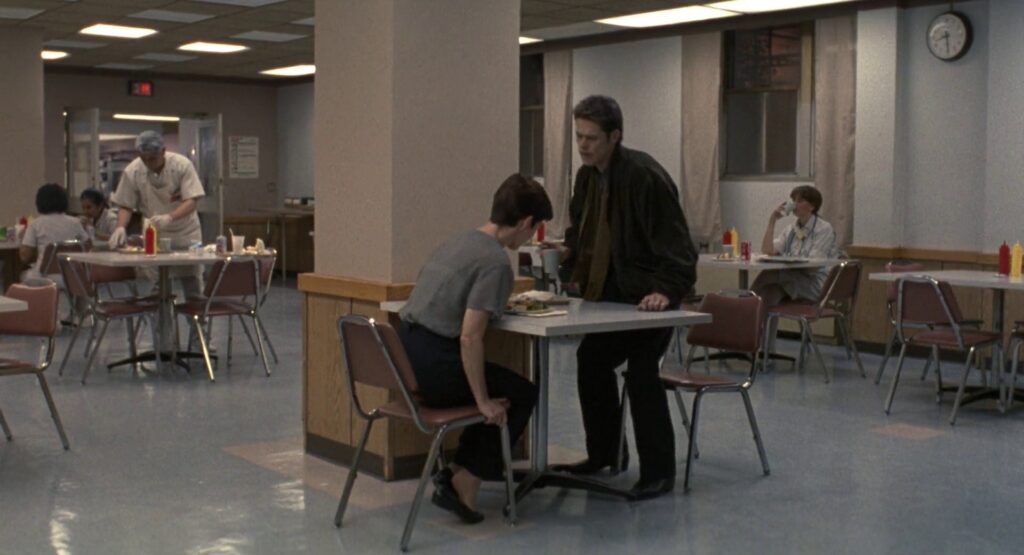
When John sits down the camera cuts to this standard medium shot of the pair at the table.
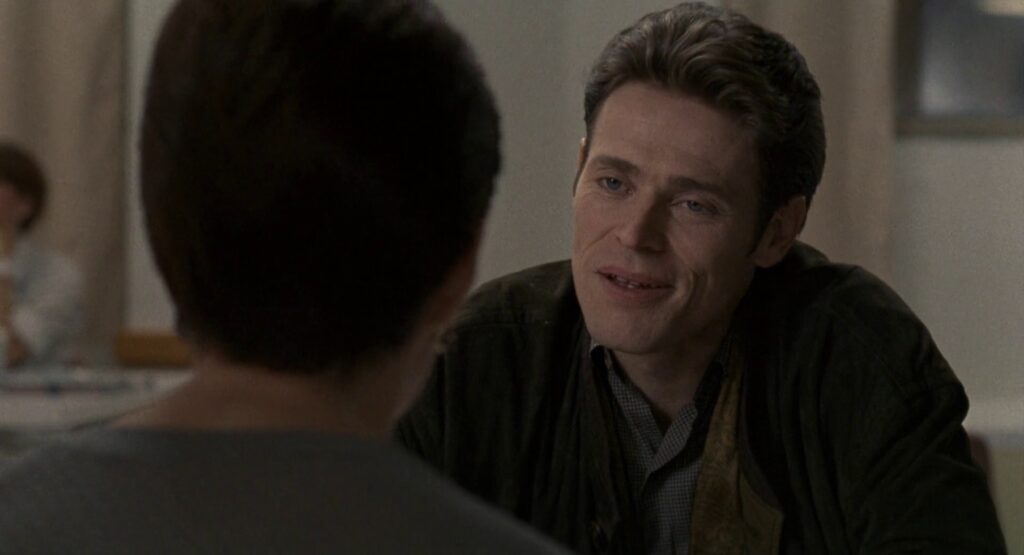
We get an over-the-shoulder shot of John as he talks about how great they used to be together. He is rather nostalgic for the old times.
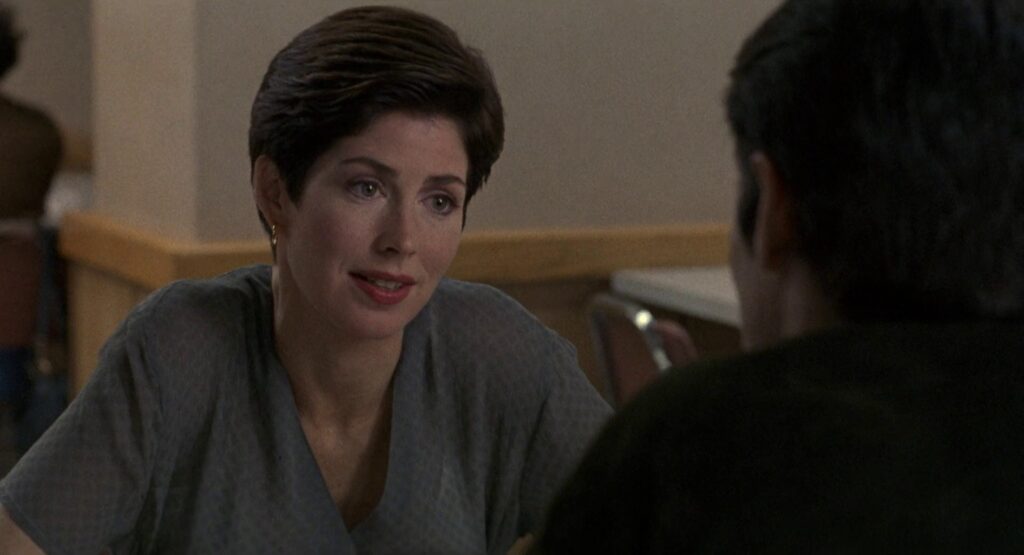
Over John’s shoulder now we see Marianne. She pushes back against the assertions John has made.
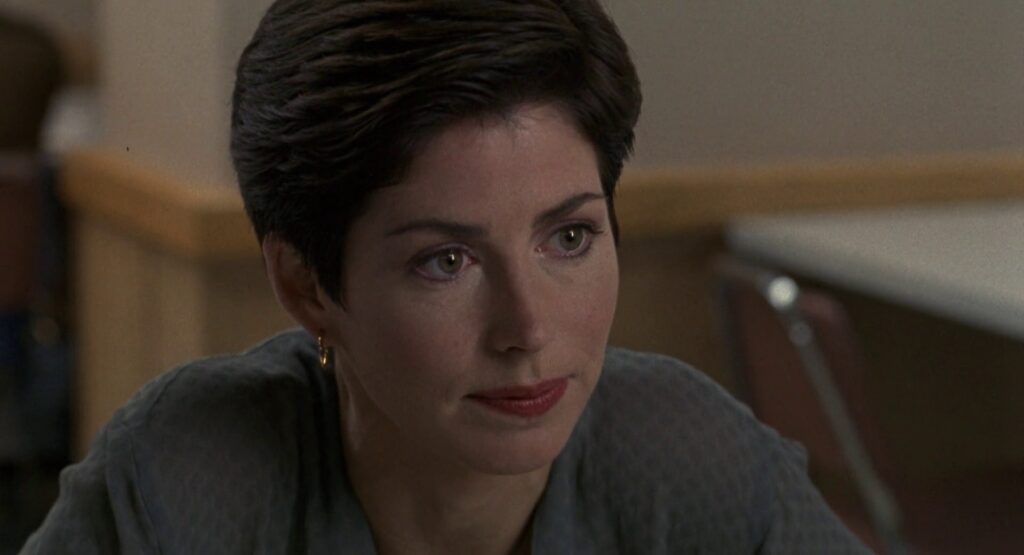
The shot pushes in on Marianne as she piles on John. He was a suicidal maniac; all their “friends” were in reality just her’s; he only remembers the highs not the lows, etc.
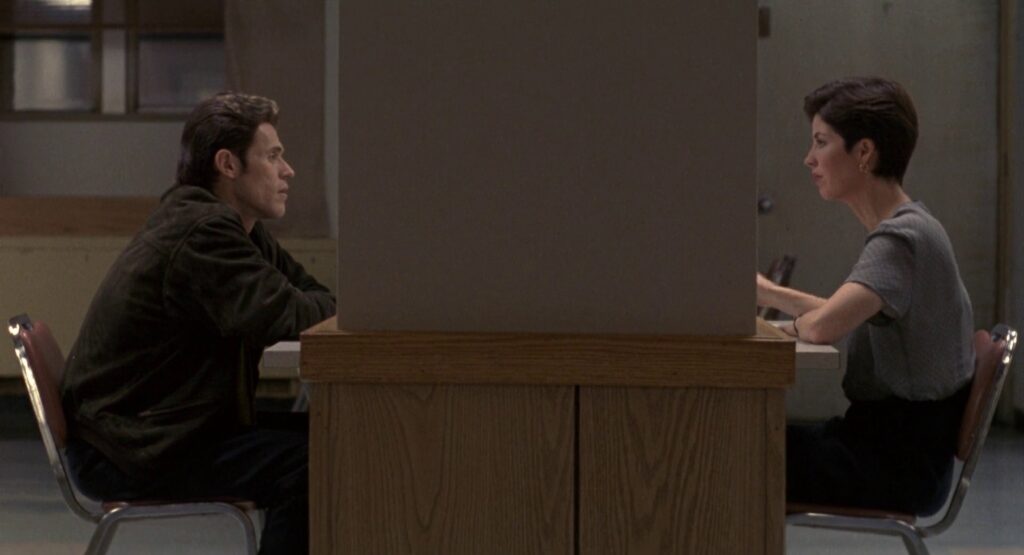
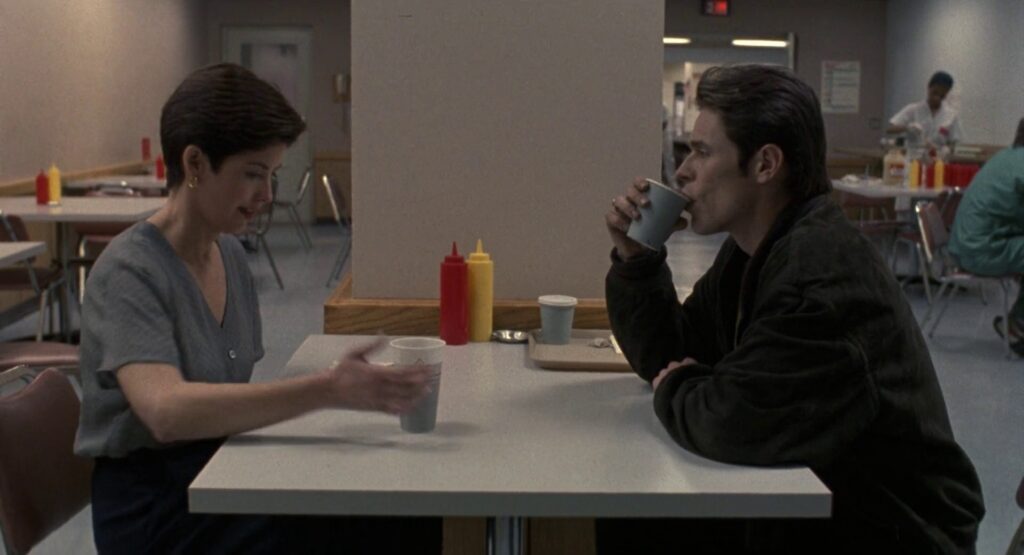
There’s a cut and Schrader breaks the 180-degree rule. We are on the wrong side of the axis. Schrader has put a column on the screen visually separating the two characters. It is jarring but is a good visual representation of the scene.
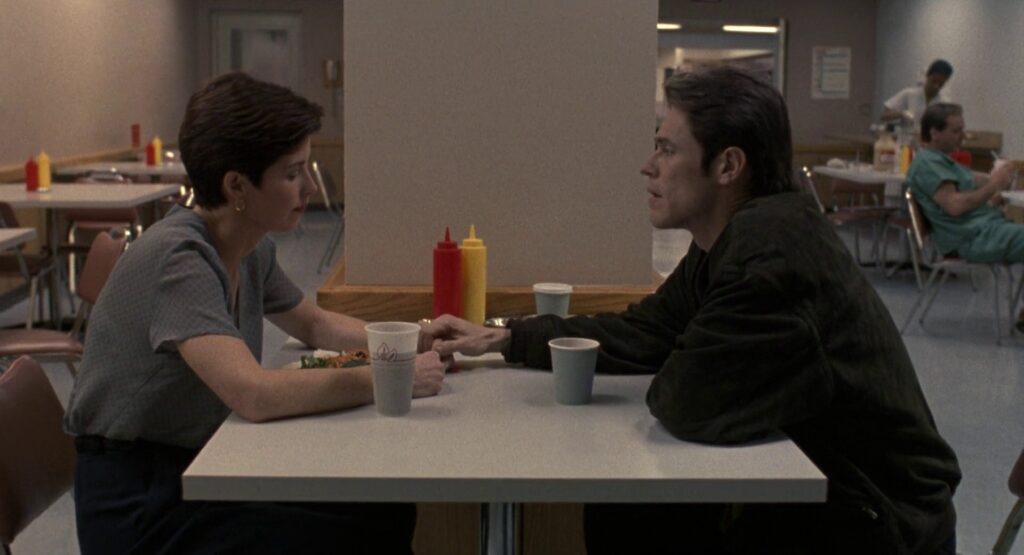
Schrader cuts back to the original medium position when John reaches out to take Marianne’s hand, keeping the congruency between the visuals and the flow of the scene.
The conversation goes on and never reaches the hostilities that it reached after Marianne’s initial harsh words. Appropriately, Schrader never goes back to the shot with the column and we stick with the originally established axis of action.
I thought this was worth sharing because this is a scene that is pretty basic. I think you would be hard-pressed to find a film that doesn’t have at least one scene shot like this. Yet this scene is one I constantly think about because of Schrader’s direction (along with great performances by Dafoe and Delaney). This scene is a good example of how you don’t need a Fredikin-level chase scene or an elaborate Scorsese Steadicam shot to make an impact on an audience.
Leave a Reply